What a hot wash does to a uniform
Healthcare laundry runs hotter than a home machine. That number shapes the seam, the color and the life of the garment.
Updated 20 September 2026 · KECOLS guides
- What heat actually damages, in order
- Five habits that add a year
- The label beats this page
- One thing a fabric does not do
A home wash and a healthcare wash are different events. One runs warm and short. The other runs hot and long, and it is the reason a uniform ages faster than the rest of your wardrobe.
A temperature of at least 160°F (71°C) for a minimum of 25 minutes is commonly recommended for hot-water washing.
Centers for Disease Control and Prevention, Laundry and Bedding, Guidelines for Environmental Infection Control in Health-Care Facilities. Read 20 September 2026.
That is the number our cutting table works to. A seam that survives forty degrees will not survive seventy, so the shoulder and hip seams on our scrub line carry a second row of stitching, and the neckline gets a knit tape that stops it stretching while it is wet.
What heat actually damages, in order
| Part | What goes first | How you notice |
|---|---|---|
| Color | Dark dyes, black first | Two tops in the same color stop matching |
| Neckline | The knit relaxes wet and dries wide | The collar sits away from the neck |
| Elastic | Waistband recovery | The band no longer springs back when pulled |
| Print and labels | Heat transfer labels lift at a corner | A tag edge catches on the skin |
Five habits that add a year
- Wash dark colors with dark colors for the first three cycles, when loose dye comes out.
- Skip fabric softener on work knits. It coats the fibre, and a coated fibre dries slower and holds smell longer.
- Close the zips on jackets before they go in. An open zip chews the fabric next to it.
- Dry on medium rather than high. Heat in the dryer costs more elastic than heat in the wash.
- Take garments out while they still hold a little warmth, then hang them. That is most of the ironing you were going to do.
Layers that take the most washes
See the department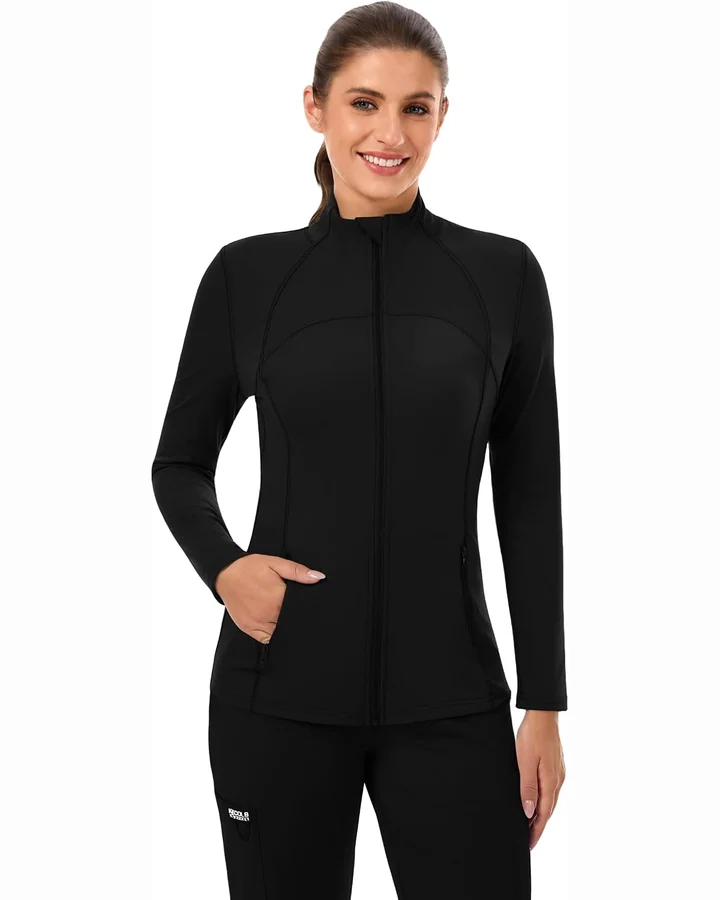
Lightweight Scrub Jacket
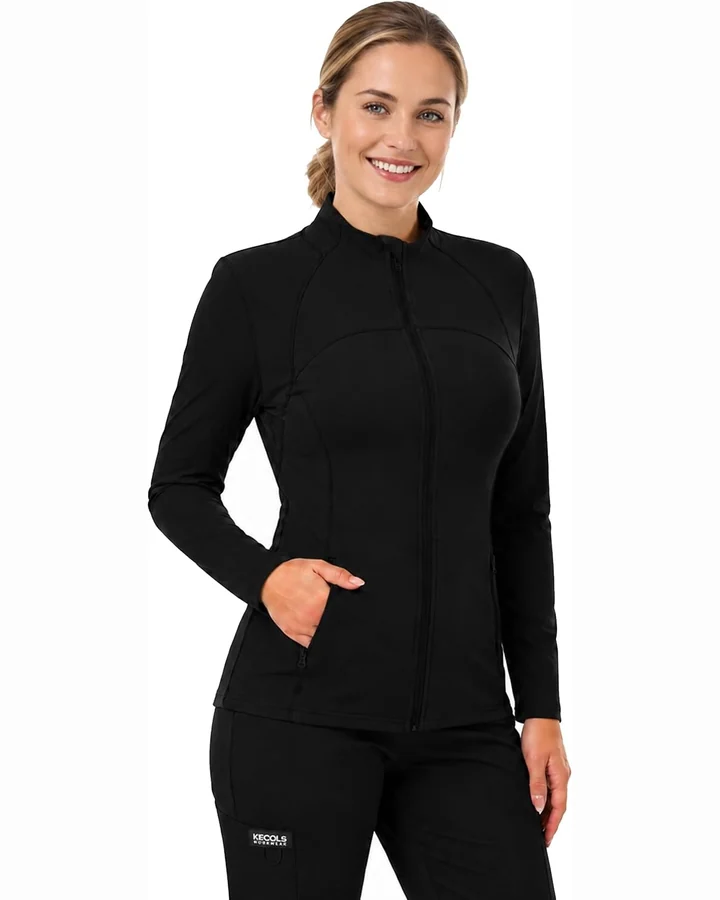
Zip-Front Scrub Jacket
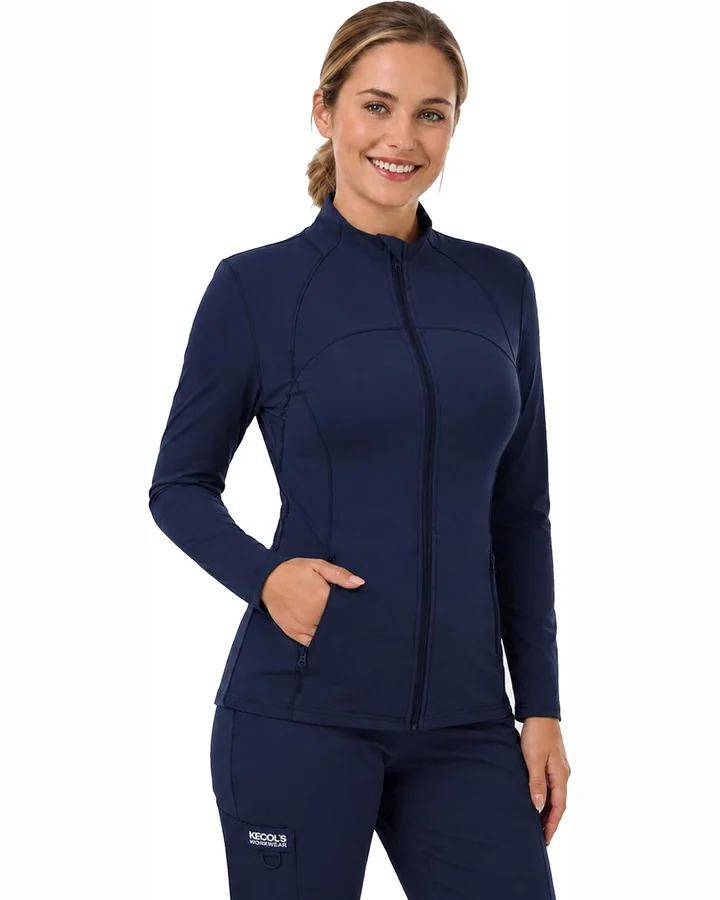
Zip-Front Scrub Jacket
The label beats this page
The label must say whether the product should be washed by hand or machine, and give a water temperature setting if regular use of hot water will harm the product.
Federal Trade Commission, Clothes Captioning: Complying with the Care Labeling Rule. Read 20 September 2026.
Every garment carries that label, and it is written for that fabric. Where our advice and the label disagree, follow the label.
One thing a fabric does not do
reports of health-care associated diseases linked to contaminated fabrics are so few in number that the overall risk of disease transmission during the laundry process likely is negligible
Centers for Disease Control and Prevention, Laundry and Bedding, Guidelines for Environmental Infection Control in Health-Care Facilities. Read 20 September 2026.
We read that as a reason to keep quiet about protection. Our scrub fabric sheds a splash of water and that is the whole claim. It is not a barrier, and no wash cycle turns it into one.
Sources read for this guide
- Centers for Disease Control and Prevention, Laundry and Bedding, Guidelines for Environmental Infection Control in Health-Care Facilities. Read 20 September 2026.
- Federal Trade Commission, Clothes Captioning: Complying with the Care Labeling Rule. Read 20 September 2026.
- Centers for Disease Control and Prevention, Laundry and Bedding, Guidelines for Environmental Infection Control in Health-Care Facilities. Read 20 September 2026.
Nothing on this page is safety advice or medical advice. Kecols clothing is ordinary apparel: it carries no flame resistance rating, no arc rating and no fluid resistance rating. If your job calls for protective clothing, follow your employer's hazard assessment and wear garments certified for that hazard.